
Cognitive Behavioral Therapy for Abandonment Issues: Complete Guide (2026)
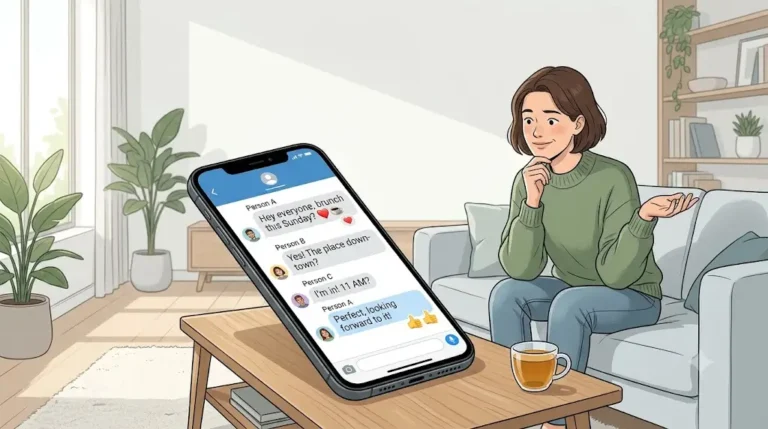
You know that feeling when a text sits there unread for three hours and your brain just… spirals? Or when things are going too well with someone, so you pick a stupid fight, almost on purpose, like you’re testing whether they’ll actually stay. That’s fear of abandonment. It doesn’t always look like a big dramatic thing. A lot of the time it’s just quietly running in the background, colouring how you react to people without you even clocking it.
That doesn’t mean something’s wrong with you. It’s a pattern you picked up somewhere along the way, and patterns like that can be changed, which is basically the whole point of Cognitive Behavioural Therapy, or CBT.
CBT is one of the more practical, well-studied ways to actually work through abandonment issues. You’re not going to spend six months digging through every painful memory from your childhood (though some of that might come up). It’s more hands-on than that. Catch the thought, question it, try reacting differently next time. That’s the loop. This guide breaks down what that looks like in real life, including a full example you can follow.
What Is CBT for Abandonment Issues?
Basically, CBT for abandonment issues is about the chain reaction between what you think, how that makes you feel, and what you end up doing because of it. The idea is to catch the automatic thought underneath the fear, something like “they’re going to leave,” and then actually stop and check: is that true, or does it just feel true?
CBT doesn’t really dwell on the past for its own sake. It stays in the present. A therapist works with you to pin down the exact moment a fear switches on. Sometimes it’s a late reply. Sometimes it’s just noticing your partner’s gone quieter than usual, or they answer in one word instead of three, and your brain runs off with it before you’ve even decided to think anything. From there you work backward together, past the panic itself, to whatever belief is actually driving it. Two show up constantly, almost suspiciously so, across totally different people and totally different histories: “I am unloveable” and “everyone eventually leaves. “It’s a little unsettling how often it’s one of those two, honestly.
Once a belief like that finally has a name, the real work starts, and it’s slower than people expect. You weigh the actual evidence for it, not just the feeling of certainty. Where did this partner ever actually leave? When did they last follow through instead of disappearing? You push back on the parts of the belief that don’t hold up under that kind of scrutiny, even when it still feels true in your body. And bit by bit, you start trading the old habits, the constant check-ins, the going quiet yourself, and the leaving before you can be left, for responses that don’t leave you completely wrung out by the end of the day. It’s not instant. Most people slip back into the old habit a dozen times before the new one starts to stick, and that’s apparently just part of how it works, not a sign you’re doing it wrong.
Most people pair this with some kind of body-calming work too, breathing, grounding, that sort of thing, because this fear isn’t just something happening in your head. Ask anyone whose stomach has dropped over a delayed text. It’s physical.
What Causes Abandonment Issues?

Usually it goes back to something pretty basic: a carer who wasn’t consistently there when you were a kid. But that’s not the only way in. Losing someone or being betrayed as an adult can rewire the brain the exact same way.
Childhood Roots: Neglect, Loss & Inconsistent Care
Kids need to know, deep down and without really thinking about it, that the people they rely on are going to come back. When that never gets fully established, whether it’s because of a divorce, a caregiver getting sick, being emotionally neglected, or losing someone close to them, the brain adjusts. It starts treating closeness like a threat, because closeness is what led to loss before.
Nobody’s choosing this on purpose. It’s a survival strategy and a pretty reasonable one given what that kid was dealing with. The issue is it doesn’t just turn off once you grow up. It keeps running long after whatever caused it is gone.
Adult Triggers: Betrayal, Breakups & Repeated Rejection
Abandonment trauma doesn’t only start in childhood; it can just as easily take root later in life. A breakup that comes out of nowhere, an affair, a friend who just stops answering and never explains why, or one bad relationship after another – they can all plant the same idea in your head: people leave, so don’t let yourself get too comfortable. And honestly, it doesn’t even take a pattern. One loss, if it hits at the wrong moment when you’re already stretched thin, can be enough to change how safe closeness feels from then on.
How Do the 4 Attachment Styles Fear Abandonment Differently?
Attachment theory goes back to psychologist John Bowlby, and it’s basically the reason two people can carry the exact same fear of abandonment and still act nothing alike. Your attachment style is what decides how you actually respond the moment you sense distance creeping into a relationship.
| Attachment Style | Core Fear | Common Behaviour | Where CBT Focuses |
| Secure | Minimal; expects relationships to hold steady | Communicates needs directly, recovers quickly after conflict | Maintenance, not repair |
| Anxious | Being unloved or replaced | Reassurance-seeking, over-monitoring a partner’s mood | Building distress tolerance and self-soothing |
| Avoidant | Losing independence or being controlled | Emotional withdrawal, minimising closeness | Naming and expressing suppressed needs |
| Disorganised | Both abandonment and closeness at once | Push-pull behaviour, unpredictable reactions | Stabilising emotional swings, building earned security |
Knowing your own pattern doesn’t excuse whatever you’ve done because of it, but it does explain it, and for a lot of people that explanation is the first real relief they feel in therapy. Not fixed yet, just finally understood.
What Are the Signs of Abandonment Issues?
Signs of fear of abandonment tend to cluster around trust, control, and reassurance. They can look different depending on age, but the underlying fear is the same.
Signs in Adults
- Constant worry that a partner is going to leave, even when there’s no real evidence pointing that way
- Overanalysing texts, tone of voice, or tiny shifts in someone’s behaviour that probably don’t mean anything
- Struggling to actually believe a relationship is stable, even a good one
- Jealousy that feels disproportionate to whatever’s actually happening
- Pulling away or ending things first, so it’s your choice and not theirs
Signs in Children & Teens
Children rarely name what they’re feeling. Instead, it shows up as separation anxiety, clinginess, or trouble self-soothing when a carer leaves the room. Teenagers may show intense reactions to being left out socially or start people-pleasing to avoid rejection from friends.
Is It Abandonment Issues, or BPD, Anxiety, or Depression?
Fear of abandonment is not a stand-alone diagnosis in the DSM-5. It’s a pattern that often appears alongside anxiety disorders, depression, and, in more intense cases, borderline personality disorder (BPD), where a frantic fear of abandonment is one of the core diagnostic features. If these fears are seriously disrupting your relationships or daily life, a licensed mental health professional can help you understand what’s actually going on, rather than guessing from a list of symptoms online.
Why Does CBT Work for Abandonment Fear?

CBT works because this fear doesn’t stick around by accident or bad luck. It’s kept alive by a specific loop that just keeps repeating itself.
The Thought → Feeling → Behaviour Loop
Here’s roughly how it goes. Something triggers it, say, a reply that takes longer than usual. That kicks off an automatic thought: they’re pulling away. The thought creates a feeling, usually panic. The feeling drives a behaviour of frantic texting, going cold and silent, whatever your version of it is. And that behaviour, more often than not, ends up creating the exact distance you were afraid of in the first place. It’s a loop that basically feeds itself. CBT’s whole strategy is to step in at the thought stage, since that’s generally the easiest link in the chain to actually catch and interrupt before it snowballs.
What Does the Research Actually Show?
CBT is one of the most heavily studied therapies out there for anxiety-related conditions, and abandonment fear behaves a lot like a specific, learned form of anxiety once you look at it that way. Meta-analyses on CBT for anxiety disorders tend to report pretty solid response rates, and plenty of people notice a real difference in how hard they react to triggers within a few months of sticking with it consistently. That said, results aren’t identical for everyone; how long the pattern’s been around and whether something else like depression or unresolved trauma is tangled up in it both make a real difference.
What CBT Techniques Actually Work for Abandonment Issues?
A handful of core techniques do most of the work in CBT for abandonment fear. None of them require you to “just think positive”. They ask you to test your thoughts like a scientist would.
Cognitive Restructuring — A Full Thought Record, Filled Out
Cognitive restructuring is the backbone of this work. You catch the automatic thought, examine it, and build something more balanced in its place. Here’s what a completed thought record actually looks like:
| Step | Example |
| Trigger | Partner hasn’t replied to a text in three hours. |
| Automatic thought | “They’re losing interest. This is how it starts.” |
| Distortion at play | Catastrophising and mind-reading |
| Feeling (1–10) | Anxiety, 8/10 |
| Evidence for the thought | They’ve been slower to reply this week. |
| Evidence against the thought | They mentioned a packed workday; they’ve never ghosted before; they always follow up |
| Balanced alternative thought | “They’re probably busy. A slow reply hasn’t meant abandonment before.” |
| Feeling after reframe (1–10) | Anxiety, 4/10 |
Doing this on paper, even a few times a week, builds a habit of pausing before reacting.
Behavioural Experiments — Testing the Feared Outcome
Thoughts tend to shift fastest when you actually test them against real life, not just think about them differently. A behavioural experiment could be something as small as waiting an hour before sending that follow-up text or saying a need out loud instead of swallowing it like usual. Nine times out of ten, the thing you were dreading doesn’t actually happen, and that right there becomes proof the old belief was off.
Exposure & Response Prevention: Reducing Reassurance-Seeking
Exposure work is really just slowly turning down the volume on avoidance and on that compulsive urge to check in one more time. If reassurance-seeking has become your go-to safety habit (texting “Are we okay?” for the third time, or scrolling their last-active status like it’s going to tell you something new), the goal isn’t to rip that away overnight. Cold turkey usually just backfires. Instead, it’s more like: don’t check for twenty minutes.’ Then thirty. Then an hour. You sit with however uncomfortable that gets, in doses you can actually tolerate, and you let the anxiety spike and then, almost every time, come back down on its own. Nobody warns you how boring this part is. It’s not a dramatic breakthrough; it’s just repetition, proving to your nervous system over and over that not checking doesn’t actually end the relationship.
Emotional Regulation: Grounding & the STOP Technique
Trying to do careful, logical thought-works while your body thinks it’s under attack just doesn’t really work; your nervous system isn’t interested in evidence at that point. So grounding comes first. Slow breathing, naming five things you can actually see in the room, pressing your feet into the floor, or whatever pulls you back into your body instead of the spiral in your head. For something faster, in the actual moment it’s happening, there’s the STOP technique. Stop, literally just pause whatever you were about to do or send. Take a breath, one real one, not a rushed one. Observe what’s going on without immediately judging it as good or bad. Proceed with intention, meaning you actually choose the next move instead of letting the panic pick it for you. It sounds almost too simple written out like that, but the whole point is that it’s supposed to be simple enough to remember when your brain is not exactly at its sharpest.
Schema Therapy: For Deep, Long-Standing Beliefs
When the fear of abandonment traces all the way back to childhood, and regular CBT just isn’t cutting it, schema therapy takes things a level deeper. It goes straight after what’s called the “abandonment schema”, that core, almost bone-deep conviction that people can’t be relied on, using tools like imagery that work on top of the usual cognitive techniques.
What Does CBT Treatment Actually Look Like, Session by Session?
CBT for abandonment issues generally follows a predictable arc, even though every therapist adapts it to the individual.
Phase 1 — Assessment & Goal Setting
The first few sessions focus on history: attachment patterns, past losses, and how the fear currently shows up. Together, you and your therapist set clear, specific goals.
Phase 2 — Skill-Building (Weeks 1–4)
Before digging into painful beliefs, you build a toolkit first: grounding, breathing, and basic thought-tracking. This creates a sense of safety before the harder work begins.
Phase 3 — Restructuring Core Beliefs (Weeks 5–12)
This is where most of the cognitive restructuring happens. You start identifying and challenging the deeper beliefs underneath the daily triggers, not just “they’re mad at me,” but “I am unloveable.”
Phase 4 — Real-World Practice & Relapse Prevention
The final stretch focuses on applying these skills in real relationships, plus building a plan for tough weeks, because setbacks are a normal part of healing, not proof that it isn’t working.
How Long Does It Realistically Take?
Many people notice meaningful change within 12 to 20 sessions, roughly three to six months of consistent weekly work. Deeper, trauma-rooted abandonment fear, especially when it involves years of neglect or repeated loss, often benefits from longer-term work, sometimes six months to over a year.
CBT, DBT, or EMDR: Which One Do You Actually Need?
These approaches overlap, but each one is built for a slightly different problem.
| Approach | Best For | Not Ideal As a Starting Point If |
| CBT | Challenging distorted thoughts and building new coping behaviours | Your main issue is intense, hard-to-control emotional flooding. |
| DBT | Severe emotional swings, urges toward self-harm, or a BPD diagnosis | You mainly need thought-level work, not crisis-level regulation. |
| EMDR | Specific, vivid traumatic memories tied to a loss or rejection | Your fear is more of a general pattern than a specific memory. |
| Schema Therapy | Long-standing, deeply rooted beliefs that haven’t shifted with standard CBT | You’re newly starting therapy and want a shorter-term approach. |
| ACT | Avoidance patterns and difficulty accepting uncertainty | You want a highly structured, skills-first approach |
Many therapists blend these approaches rather than sticking to just one. It’s worth asking a potential therapist how they typically combine methods for abandonment-related concerns.
How Can You Practice CBT Between Sessions?
Most of the real change in CBT happens outside the therapy room, in the small, repeated moments between sessions.
4-Column Thought Record Template
Keep it simple: Trigger, Automatic Thought, Evidence For/Against, Balanced Thought. Use it whenever a wave of fear hits; even a two-minute version helps more than skipping it.
Grounding Script for Panic Moments
When anxiety spikes, try this: name three things you can see, two things you can hear, and one thing you can physically feel. Slow your exhale until it’s longer than your inhale. This signals safety to your nervous system.
Journaling Prompts
- What abandonment fear showed up today, and what triggered it?
- What did I actually do in response?
- What would I tell a close friend feeling this exact thing?
Apps, Books & Worksheets
Look for CBT-based worksheets specifically built around thought records and cognitive distortions. Many therapists offer free templates, and reputable psychology resource sites publish printable versions if you want to start before your first session.
How Can You Support a Partner With Abandonment Fear?
Loving someone with abandonment fear can feel confusing. Their reactions can seem disproportionate to what actually happened, even though the fear itself is very real to them.
What Actually Helps
Consistency matters more than grand gestures. Following through on small promises, texting back when you say you will, and staying calm during their anxious moments slowly builds the evidence their nervous system is looking for.
What Makes It Worse
Mocking their fear, disappearing during conflict, or giving inconsistent attention (warm one day, distant the next) tends to confirm the exact belief they’re trying to unlearn.
Setting Boundaries Without Triggering Shame
You can still have limits. Saying “I need some space right now, and I’ll be back in an hour” is very different from just going silent. The goal is clarity, not withdrawal.
How Much Does CBT Cost & Where Do You Find It?

Cost and access are often the real barrier to starting therapy, not motivation.
In-Person vs. Online CBT
Online CBT through licensed telehealth platforms tends to cost less than in-person sessions and removes travel time, which matters if anxiety already makes new situations harder. In-person therapy can offer a stronger sense of presence for some people, particularly when trauma is involved.
Insurance & Sliding-Scale Options
Many insurance plans cover CBT when it’s provided by a licensed clinician, though copays and session limits vary widely. Community mental health centres and training clinics often offer sliding-scale fees based on income, which can make consistent care realistic on a tighter budget.
How to Find a Therapist Who Specialises in Attachment Work
Search therapist directories and filter specifically for CBT, attachment-based therapy, or trauma-informed care. During a first consultation, it’s reasonable to ask directly whether they have experience treating abandonment-related fear.
How Do You Know CBT Is Actually Working?
Progress in this kind of work is quiet at first. It shows up as a slightly smaller reaction, not a sudden transformation.
A Simple 1–10 Distress Tracker
Rate your distress level each time a trigger happens, right when it occurs. After a few weeks, look back. A drop from consistent 8s to consistent 5s is real, measurable progress, even if it doesn’t feel dramatic day to day.
What Progress Looks Like, Month by Month
Early wins usually look like catching the thought sooner. Around month two or three, people often notice they recover faster after a trigger. Deeper shifts, trusting closeness without bracing for loss, tend to build over six months or longer, and that timeline is completely normal.
When Should You Seek Immediate Professional Help?
Self-guided CBT tools are genuinely useful, but they are not a replacement for professional support when things escalate. Reach out to a licensed therapist promptly if abandonment fear is seriously disrupting your relationships, work, or daily functioning, or if it’s showing up alongside depression, substance use, or self-harm.
If you are in crisis or having thoughts of suicide, please reach out right away. In the US, you can call or text 988 to reach the Suicide & Crisis Lifeline, or text HOME to 741741 to reach the Crisis Text Line. You don’t have to be in a full crisis to use these lines; they also support people in acute emotional distress.
Frequently Asked Questions
Can CBT actually cure abandonment issues?
CBT doesn’t erase the fear entirely, but it substantially reduces how often it’s triggered and how intense it feels. Most people describe it as going from constantly reactive to noticeably more secure, rather than a total personality change.
Is fear of abandonment a mental illness?
No. It’s not a stand-alone diagnosis but a pattern of thinking and behaviour that often overlaps with anxiety, depression, or borderline personality disorder. A licensed clinician can help clarify what’s underneath it in your specific case.
How long does CBT take to work for abandonment trauma?
Many people notice meaningful change within 12 to 20 sessions, roughly three to six months. Deeper, trauma-rooted patterns can take longer, sometimes six months to over a year of consistent work.
Can I do CBT for abandonment issues without a therapist?
Self-guided tools like thought records and journaling can help with mild patterns, but professional guidance is strongly recommended for anything rooted in significant trauma or affecting daily functioning.
What’s the difference between abandonment issues and attachment issues?
They overlap heavily. Abandonment issues describe the specific fear of being left. Attachment issues describe the broader pattern, shaped in early relationships, that produces that fear along with other relational habits.
Conclusion
Abandonment issues don’t mean something is permanently wrong with you. They mean your nervous system learned, at some point, that closeness wasn’t safe. CBT gives you a structured, evidence-based way to test that old belief against your actual life today, one thought record, one small experiment, at a time. Healing isn’t instant, but it is realistic, and it tends to move faster than most people expect once the right support is in place.
Disclaimer
This article is for informational and educational purposes only and should not be considered medical advice, diagnosis, or treatment. Always consult a qualified healthcare professional or licensed medical provider before making any decisions about your health or starting any new treatment. Never ignore or delay seeking professional medical advice because of something you have read in this article. While we strive to keep the information accurate.