
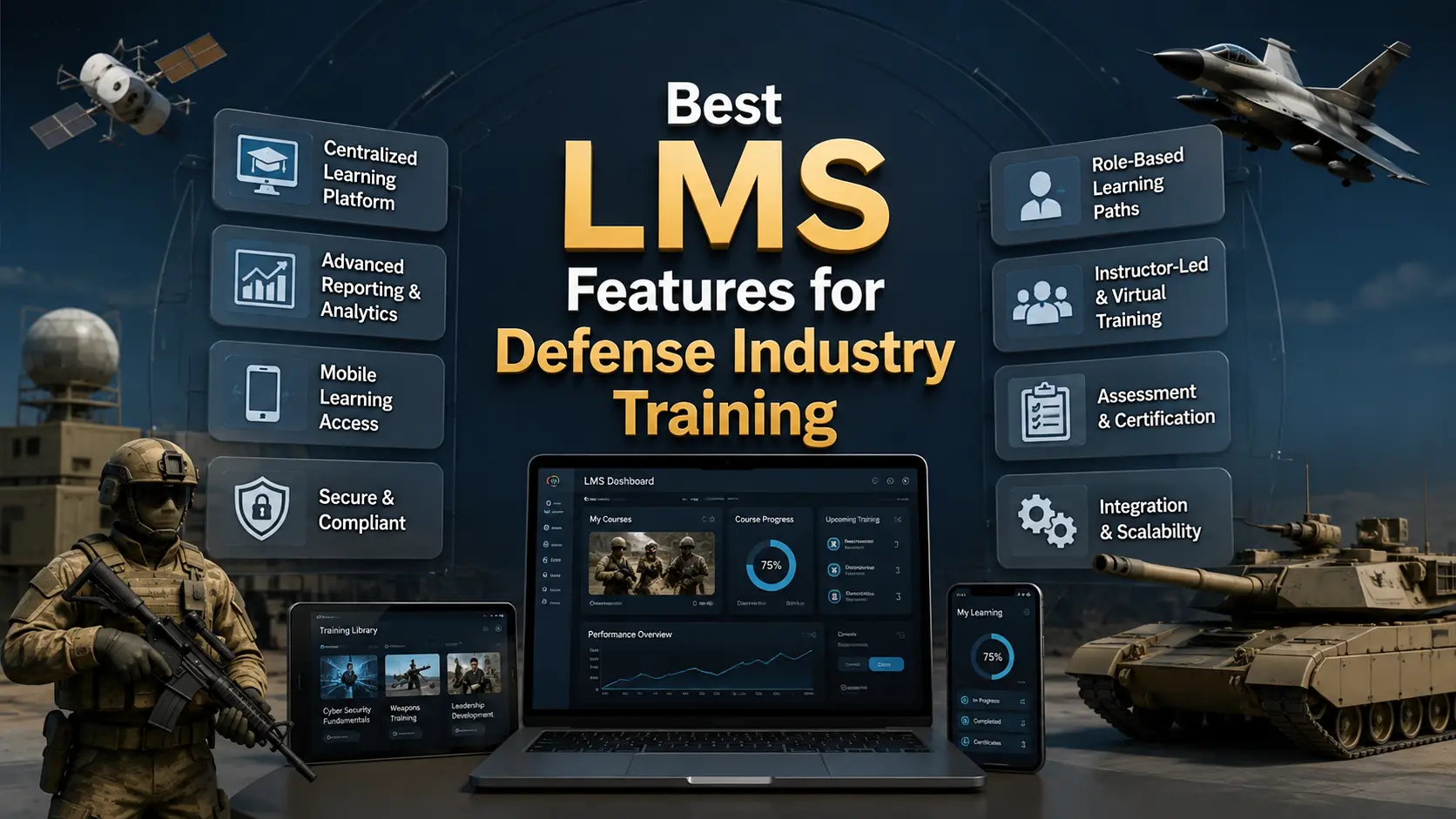
Best LMS Features for Defense Industry Training
Defense organizations operate in one of the most demanding environments in the world. Every employee, contractor, and military professional must receive accurate, timely, and secure training to perform their responsibilities effectively. Whether the goal is maintaining operational readiness, meeting strict regulatory requirements, or preparing personnel for mission-critical tasks, there is little room for error.
That is why investing in the right LMS For Defense Industry is no longer optional. A modern learning management system helps organizations streamline training, strengthen compliance, and keep personnel prepared without sacrificing security. Solutions such as Gyrus Systems demonstrate how purpose-built learning platforms can support the unique needs of military and defense organizations while adapting to evolving operational demands.
Why the Defense Industry Needs a Specialized LMS
Traditional corporate learning platforms often lack the capabilities required for defense training. Military organizations and defense contractors must manage highly regulated learning programs, protect sensitive information, and ensure personnel remain qualified for specialized roles.
An advanced LMS For Defense Industry supports these complex requirements by centralizing learning, automating administrative tasks, and maintaining detailed training records for audits and compliance reviews.
Unlike generic learning systems, a specialized platform focuses on operational readiness while supporting secure knowledge delivery across multiple locations, departments, and teams.
Best LMS Features for Defense Industry Training
Security & Data Protection
Security is the foundation of every defense training program. Learning platforms must safeguard sensitive information while controlling who can access training materials.
Key security capabilities include:
- Role-based user permissions
- Secure authentication methods
- Encrypted data storage
- Protected cloud or private deployment
- Comprehensive audit logs
Organizations evaluating the Best Cloud LMS For Defense Industry Companies should prioritize platforms with enterprise-grade security that supports government and defense requirements.
Compliance Tracking
Defense organizations operate under strict regulations that require continuous employee training and accurate documentation.
A quality Compliance Training Software solution should automatically:
- Assign mandatory courses
- Send renewal reminders
- Monitor completion deadlines
- Track recurring certifications
- Generate compliance reports
Automation reduces manual work while helping organizations remain inspection-ready throughout the year.
Certification Management
Many defense roles require certifications that must remain current. Instead of relying on spreadsheets or manual reminders, modern learning platforms automate certification management by tracking expiration dates and notifying employees before credentials lapse.
This reduces administrative effort while minimizing the risk of personnel performing duties with expired qualifications.
Reporting & Analytics
Training leaders need clear visibility into organizational readiness.
Advanced reporting tools allow managers to monitor:
- Course completion rates
- Certification status
- Individual learner progress
- Department performance
- Compliance percentages
Platforms like Gyrus Systems provide configurable dashboards that transform training data into meaningful insights, allowing leadership teams to identify skill gaps before they affect operations.
Mobile Learning
Defense personnel are not always working behind a desk. Training may occur at remote facilities, operational sites, or during deployments.
Mobile learning provides flexibility by allowing authorized users to access approved learning materials whenever appropriate.
Benefits include:
- Learning from multiple devices
- Faster onboarding
- Greater scheduling flexibility
- Continuous professional development
A modern LMS Military solution supports learning wherever operational demands require personnel to be.
Integrations
Training rarely exists in isolation.
A capable learning platform should integrate with systems such as:
- Human Resource Information Systems (HRIS)
- Identity management platforms
- Document management solutions
- Enterprise reporting tools
- Performance management software
These integrations reduce duplicate data entry while creating a more connected learning environment.
Learning Paths
Every defense role requires different skills and certifications.
Structured learning paths guide personnel through organized development programs based on responsibilities, career progression, or operational requirements.
Learning paths may include:
- Required compliance courses
- Leadership development
- Technical certifications
- Equipment training
- Role-specific competencies
This structured approach ensures employees receive consistent training while supporting long-term career development.
Assessments & Skills Tracking
Course completion alone does not guarantee competency. Organizations must verify that personnel understand procedures before performing mission-critical responsibilities.
Effective assessment capabilities include:
- Knowledge quizzes
- Practical evaluations
- Scenario-based exercises
- Skills verification
- Performance tracking
A modern Mission Ready LMS For Military and Defense helps organizations measure both learning completion and demonstrated competency, ensuring employees are prepared for real-world responsibilities.
Benefits of Using an LMS in Defense Organizations
Implementing a specialized learning platform provides advantages that extend well beyond course delivery.
Organizations often experience improvements in:
- Training consistency across locations
- Regulatory compliance management
- Operational readiness
- Administrative efficiency
- Workforce development
- Certification tracking
- Leadership visibility through analytics
A dedicated LMS For Military and Defense Industry also simplifies large-scale training initiatives while helping organizations adapt quickly to changing operational requirements. Gyrus Systems support these goals by combining automation, reporting, and secure learning management into one centralized solution, making it easier to manage complex defense training programs.
How to Choose the Right Defense LMS
Selecting the right learning platform requires evaluating more than basic functionality.
When comparing vendors, consider whether the solution offers:
- Advanced security controls
- Automated compliance tracking
- Flexible deployment options
- Mobile accessibility
- Powerful reporting dashboards
- Certification management
- Integration capabilities
- Custom learning paths
- Scalable architecture
Organizations searching for the Best AI-Powered Mission Ready LMS for Defense Industry should also evaluate intelligent automation, personalized learning recommendations, and analytics that improve decision-making without increasing administrative workload.
Choosing a platform designed specifically for defense environments helps ensure training programs remain efficient, secure, and adaptable as organizational needs evolve.
Final Words
Defense organizations depend on well-trained personnel to maintain operational excellence and regulatory compliance. A modern LMS For Defense Industry delivers far more than online courses by providing secure learning, automated certification management, compliance tracking, detailed reporting, and structured development programs that support mission readiness.
Whether managing military personnel, government employees, or defense contractors, selecting a specialized platform can significantly improve training outcomes while reducing administrative complexity. Gyrus Systems offers organizations a practical example of how secure, scalable, and mission-focused learning technology can strengthen workforce readiness today while preparing teams for tomorrow’s challenges.
Disclaimer: This article is for general informational purposes only and does not constitute professional, legal, security, or defense-related advice. Organizations should evaluate LMS solutions based on their specific requirements.