


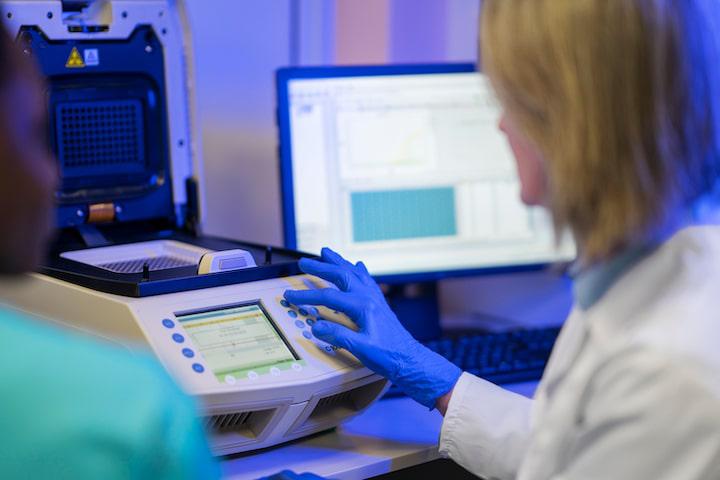
In any discipline that depends on quantitative cell biology — biopharmaceutical production, advanced therapy creation, regenerative medicine, immunology and high-content screening — the precision of cell counting plays a pivotal role in data accuracy. As workflow practices have developed, measurement expectations have also become more rigorous. Manual hemocytometry, which was once thought to be a general standard, is known to have introduced significant operator-dependent variations, workflow inefficiency, and an unnecessary error spread. This methodological “slip” is especially problematic as assays increase in scale, regulatory expectations become more stringent and cell-based products advance to clinical translation. This technological and methodological change emphasized the need for automated solutions, such as the modern automated cell counter. In this arena, Logos Biosystems is leading the way as a key innovator, driving new standards in precision, workflow conformity and digital traceability for both research and industrial facilities.
From Manual Variability to Digital Rigor
The cell counter is often treated as a simple tool—one that gives a concentration, a viability percentage, and little more. But experts know that accuracy in biological quantification is rarely this straightforward. Manual counting introduces several structural challenges:
●Operator subjectivity, particularly in borderline morphological categories
●Variable sample loading, especially with viscous samples or primary cells
●Eye-fatigue-induced drift, a nontrivial factor in high-volume environments
●Inherently low throughput, leading to bottlenecks and timing mismatches with downstream assays
An automated cell counter, by contrast, enforces consistency. Logos Biosystems uses a mix of the clear optics, consistent illumination path and strong machine vision algorithm that seems to be able to distinguish a cell from debris based on criteria far finer than those that can be judged by the eye. Contemporary counters use consistent focal planes, controlled imaging exposures and standardized analysis thresholds; these also serve to dramatically limit experimental noise.
Why Precision Matters More Than Ever
Cell-based workflows increasingly demand reproducible quantification at stages where even small deviations cascade into major functional consequences:
●CAR-T and TCR-engineered T cell workflows rely on exact input cell densities to maintain transduction efficiency and expansion kinetics.
●Organoid and spheroid systems depend on precise seeding ratios to ensure morphometric reliability.
●Assay normalization across multi-plate screens collapses if initial densities vary by more than a few percent.
●Biomanufacturing documentation now requires traceable quantitative controls aligned with GMP expectations.
In all these contexts, the choice of a cell counter is no longer peripheral—it is a methodological anchor. Logos Biosystems’ technology has been widely adopted because its automation does not merely replace subjective labor; it introduces standardization mechanisms that materially improve experimental reproducibility.
Optics and Algorithms Designed for Heterogeneous Samples
One of the most consistent challenges in cell enumeration is heterogeneity—primary immune cells, stem cells, adherent lines, and dissociated tissues all present distinct morphological signatures. A single threshold-based approach rarely works across such diversity. Logos Biosystems addresses this in several ways:
●Adaptive segmentation algorithms trained to separate clustered cells without undercounting or fragmenting them.
●Morphology-integrated viability discrimination, allowing more accurate trypan blue or AO/PI-based analysis in samples with debris.
●Improved depth-of-field optics to manage thick suspensions and reduce out-of-focus artifacts.
●Advanced fluorescence enumeration, enabling precise quantification of subpopulations, small cells, or cells obscured in brightfield mode.
The result is a platform that maintains reliability across biologically complex or clinically relevant samples where standard counters often fail.
Digital Traceability and Data Integrity
Modern laboratories—particularly regulated or audit-exposed environments—require more than accurate measurements. They require traceable, secure, and reviewable data records. Logos Biosystems has incorporated several features aligned with these demands:
●Automated report generation with metadata, sample identifiers, and timestamping
●Integration with laboratory information systems (LIMS)
●Standardized imaging records to support retrospective analysis
●Export formats suitable for batch documentation or regulatory review
The shift from a traditional cell counter to an automated platform introduces an additional layer of digital accountability, supporting both scientific reproducibility and compliance obligations.
Scalability and Workflow Efficiency
As laboratories scale, throughput becomes a defining concern. Automated systems not only reduce hands-on time but also synchronize counting with upstream and downstream modular tasks. Logos Biosystems supports this through:
●High-throughput slide formats or multi-sample workflows
●Rapid analysis capable of processing dozens to hundreds of samples per hour
●Configurable QC checkpoints that flag deviations rather than allowing bad inputs to propagate
●The cumulative effect is a workflow that is faster, cleaner, and fundamentally more reliable.
Cell counting is now a data driven science. Today’s automated cell counter is far more than a replacement for the hemocytometer. It is, in fact, a backbone of analytical quality in a world where cell-based assay work is integral to both discovery and product development. In an age of precision optics, sophisticated algorithms, and a focus on digital quality, Logos Biosystems is, and will continue to be, a leader, if not the only one, that sets a bar that must be reached with respect to what a cell counter can and must deliver. In a lab seeking elimination of variability and optimization of reproducibility, moving from manual technology is no longer a product improvement—it is a necessary evolution.
