
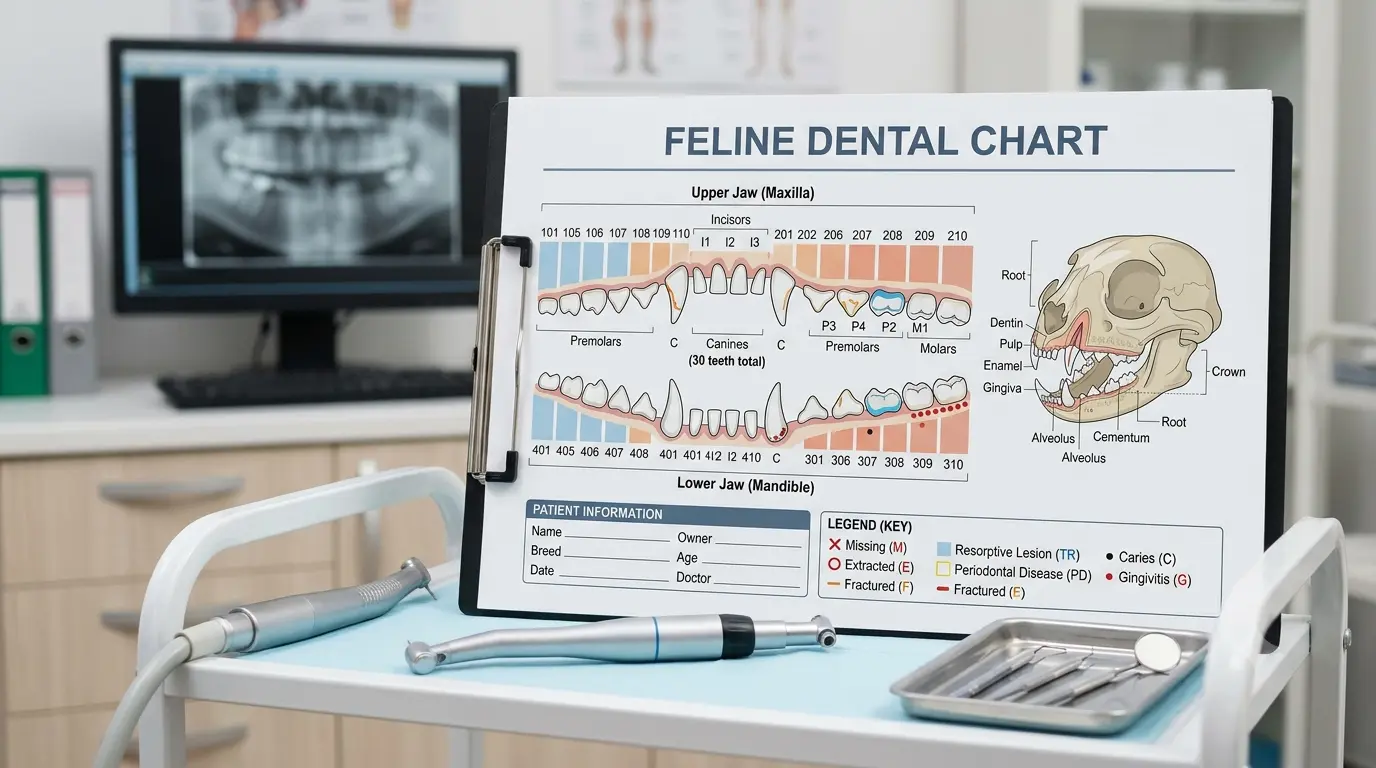
Feline Dental Chart: A Complete Guide to Cat Teeth Anatomy, Numbering, and Dental Health
6
Introduction
Have you ever noticed your cat opening its mouth while yawning and wondered how those tiny teeth work? Cats may look like they have simple little mouths, but their teeth are carefully designed for different purposes, from grooming and holding food to tearing and processing their meals.
A feline dental chart is a helpful tool that shows the location, type, and arrangement of a cat’s teeth. Veterinarians use these charts during dental examinations to identify individual teeth, record problems, and create accurate treatment plans.
For cat owners, understanding a cat dental chart can make veterinary visits less confusing. When a veterinarian mentions a specific tooth, gum issue, or dental condition, knowing the basics of feline dental anatomy helps you understand your cat’s oral health better.
This guide explains everything about a feline dental chart, including cat teeth anatomy, tooth numbering, kitten teeth, adult teeth, common dental problems, and ways to maintain good feline dental health.
Do you love to read fashion articles?
What Is a Feline Dental Chart?
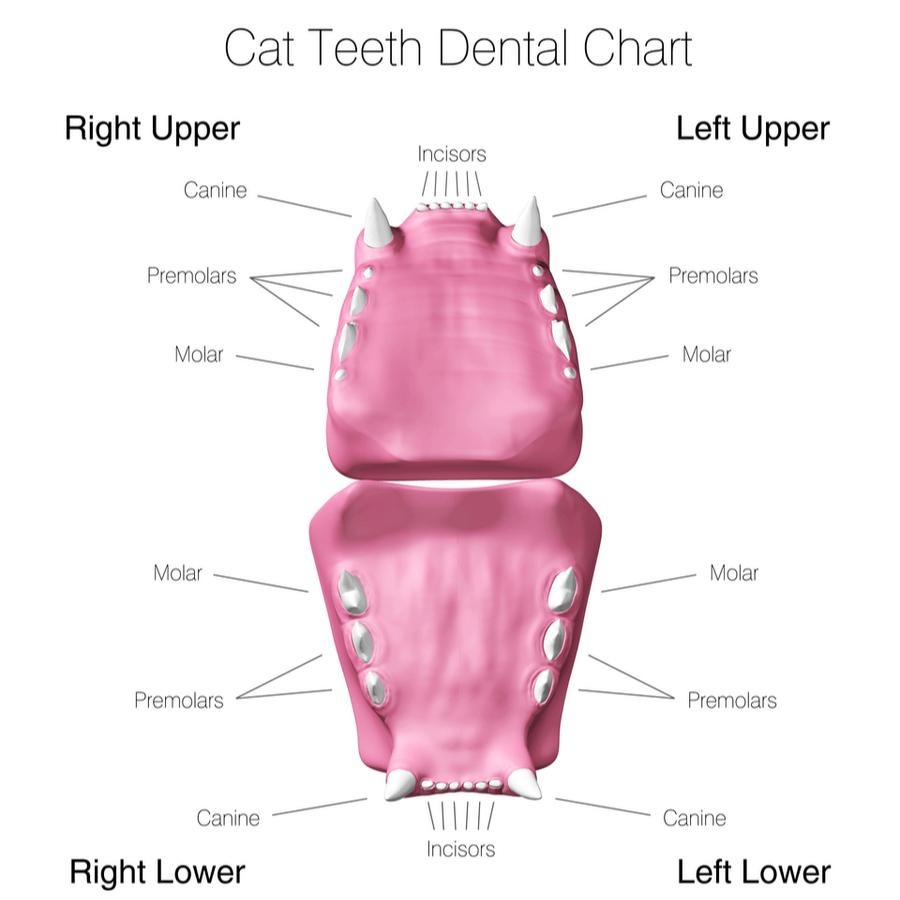
A feline dental chart is a visual representation of a cat’s mouth that identifies the different teeth and their positions. Similar to a map, it helps show exactly where each tooth is located.
Cats have different types of teeth, and each one has a specific function:
- Incisors help with grooming and picking up objects.
- Canines help with gripping and tearing.
- Premolars help cut food.
- Molars assist with processing food.
Veterinarians use a veterinary dental chart for cats to document the condition of each tooth. During an oral examination, they may record:
- Missing teeth
- Broken teeth
- Tooth decay or damage
- Gum inflammation
- Tartar buildup
- Teeth requiring treatment
A dental chart allows veterinary professionals to track changes over time and maintain accurate dental records.
Why Is a Cat Dental Chart Important?
A cat’s dental problems are not always easy to notice. Cats often hide discomfort, meaning a dental issue may exist before obvious symptoms appear.
A feline tooth chart helps veterinarians
- Identify specific teeth accurately
- Monitor dental health during checkups
- Plan dental procedures
- Track changes from previous visits
How Many Teeth Do Cats Have?
One of the most common questions about feline dental anatomy is, “How many teeth does a cat have?”
The answer depends on the cat’s age.
Kitten Teeth: Understanding Baby Teeth
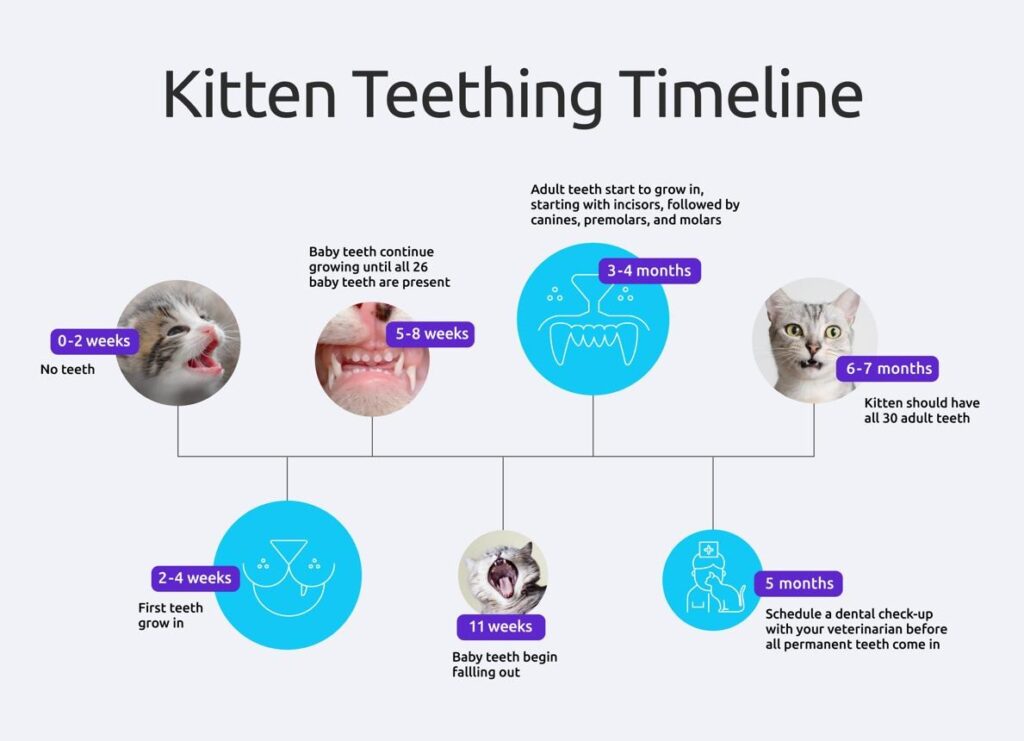
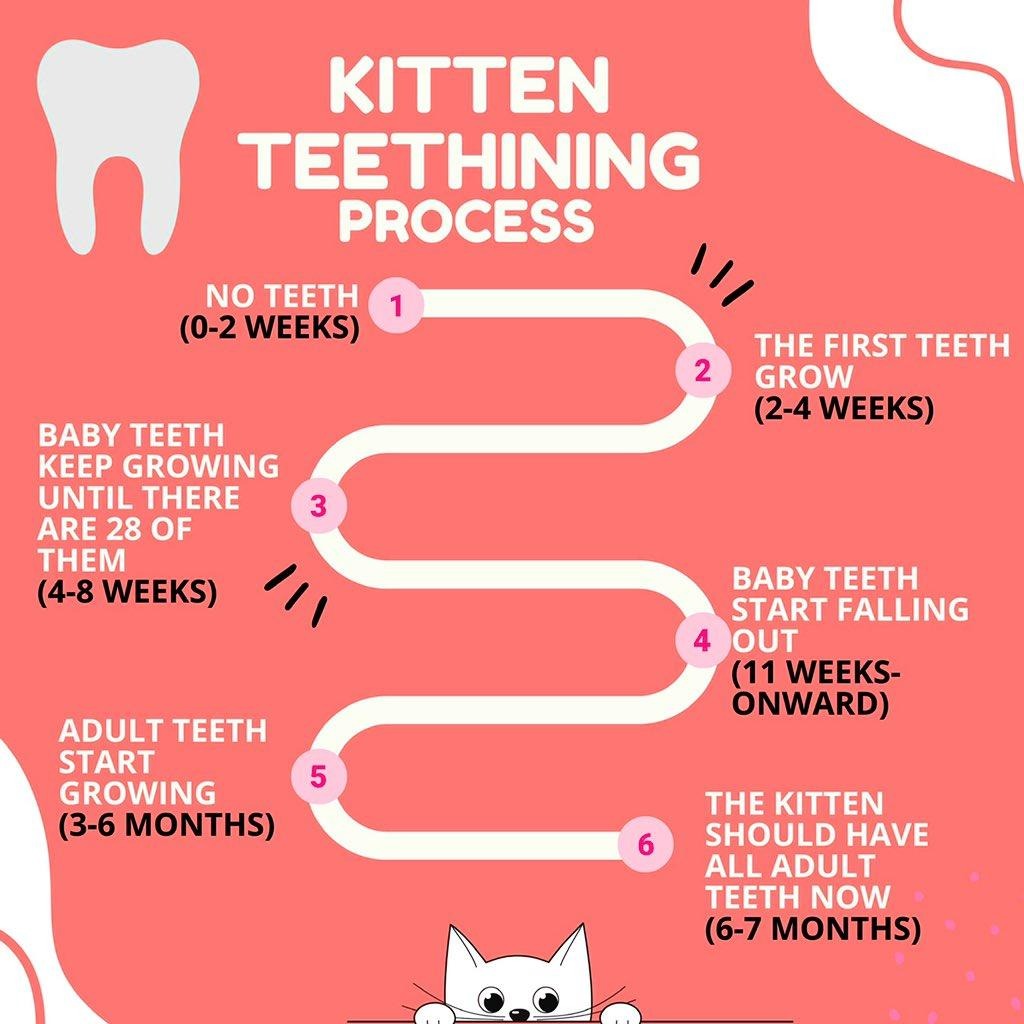
Kittens are not born with visible teeth. Their first set of teeth, known as deciduous teeth or baby teeth, begins appearing during the first weeks of life.
A kitten usually develops the following:
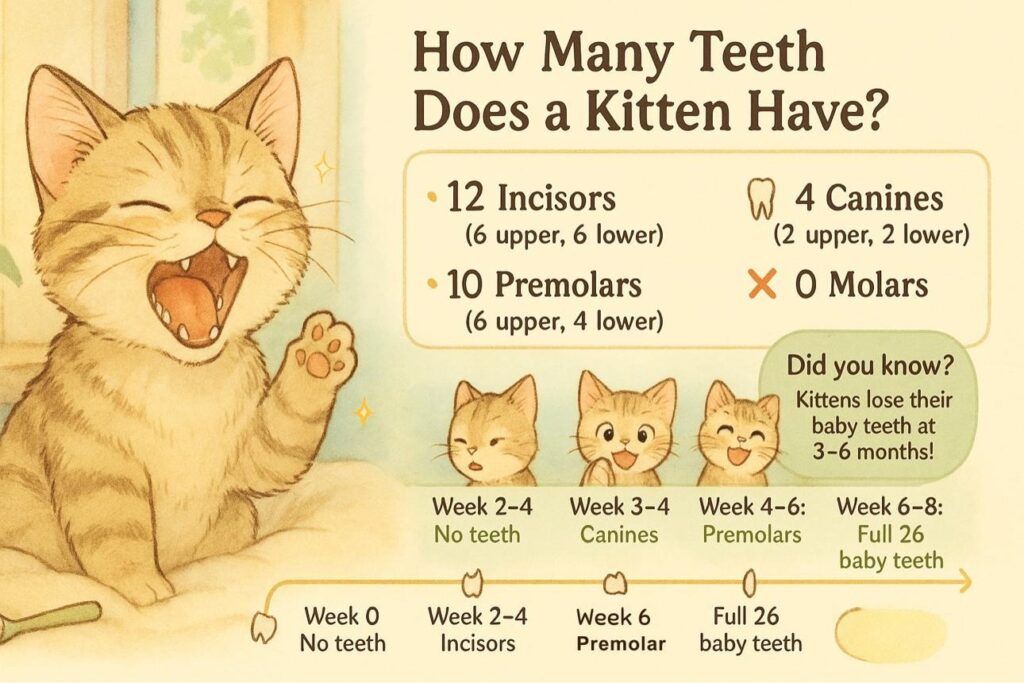
26 baby teeth
These include:
- 12 incisors
- 4 canines
- 10 premolars
These temporary teeth help kittens learn how to eat solid food before they are replaced by adult teeth.
Adult Cat Teeth: Permanent Teeth
As kittens grow, their baby teeth gradually fall out and are replaced by permanent adult teeth.
An adult cat normally has the following:
30 permanent teeth
Adult cat teeth include the following:
- 12 incisors
- 4 canines
- 10 premolars
- 4 molars
These teeth are designed for a cat’s natural eating behavior and play an important role in maintaining overall health.
Cat Teeth Anatomy Explained
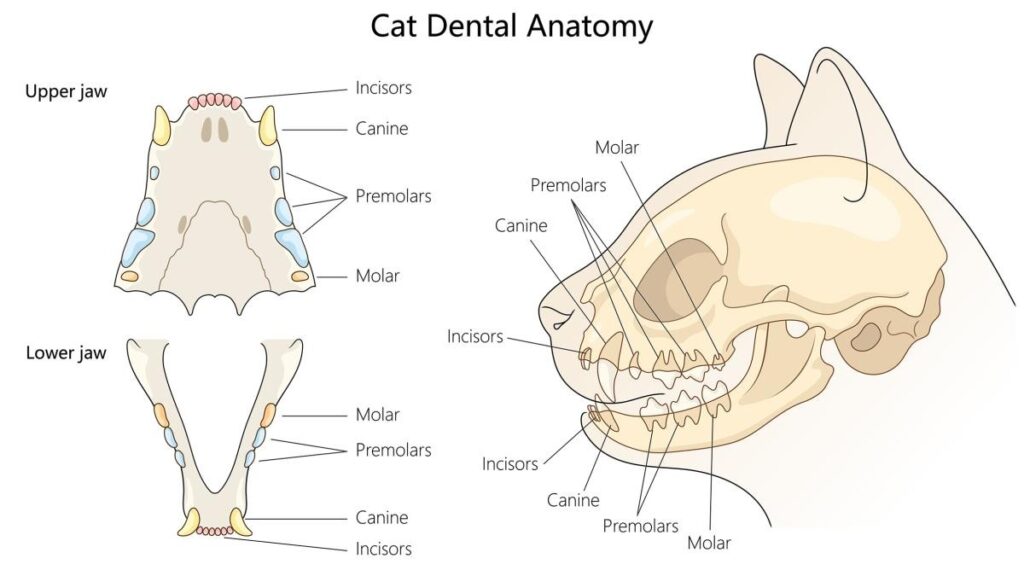
Understanding the different types of teeth makes it easier to read a feline dental chart.
Incisors: The Small Front Teeth
Incisors are the tiny teeth located at the front of the mouth. Cats use these teeth mainly for the following:
- Grooming their fur
- Picking up small pieces of food
- Scraping meat from bones
Although they are small, incisors are an important part of feline oral anatomy.
Related terms:
- Cat incisors
- Feline front teeth
- Cat tooth anatomy
Canines: The Pointed Teeth
Canine teeth are the long, sharp teeth that many people recognize as a cat’s “fangs.”
Their main functions include:
- Holding prey
- Gripping objects
- Tearing food
Healthy canine teeth are important because they provide strength and stability when cats bite.
Related terms:
- Cat’s canine teeth
- Feline canine anatomy
- Cat fangs
Premolars: Cutting and Processing Teeth
Premolars are located behind the canine teeth. They help cats:
- Cut food into smaller pieces
- Process their meals
- Maintain normal chewing function
When looking at a cat dental anatomy chart, premolars usually make up a large portion of the side teeth.
Related terms:
- Cat premolars
- Feline premolar teeth
- Cat chewing teeth
Molars: The Back Teeth
Molars are positioned at the back of the mouth. Cats have fewer molars compared to humans because their teeth are adapted for a meat-based diet.
Their purpose is mainly the following:
- Crushing food
- Supporting chewing movements
Related terms:
- Cat molars
- Feline molar teeth
- Cat’s back teeth
Feline Dental Formula Explained
If you have come across the term feline dental formula, it may sound complicated at first. In simple terms, a dental formula is a way of describing how many teeth of each type a cat has on one side of its upper and lower jaws.
Veterinary professionals use dental formulas to describe tooth arrangement without having to list every tooth individually. The formula helps explain the number of:
- Incisors
- Canines
- Premolars
- Molars
The dental formula is different for kittens and adult cats because kittens have temporary deciduous teeth, while adult cats have permanent teeth.
For cat owners, the most important thing to understand is that the dental formula provides a standardized way to describe feline dental anatomy and tooth arrangement.
Understanding the Cat Tooth Numbering System
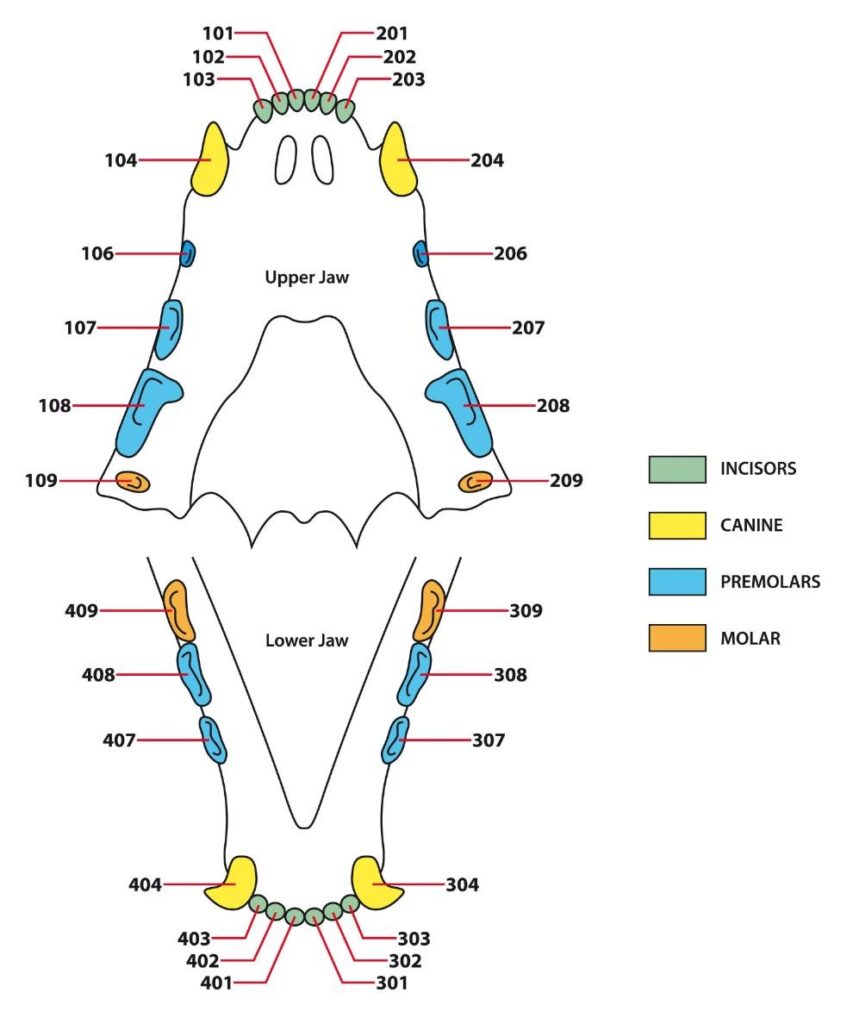
A cat tooth numbering chart helps veterinarians identify individual teeth. Instead of saying “the tooth near the back on the left side,” a veterinarian can use a recognized numbering system to record the exact tooth involved.
This is especially useful when a cat needs the following:
- A dental examination
- Dental X-rays
- Treatment for a damaged tooth
- Tooth extraction
- Ongoing dental monitoring
A feline tooth identification chart may show the upper and lower jaws separately. It can also distinguish between the left and right sides of the mouth.
Why Is Tooth Numbering Important?
Imagine trying to describe one specific house in a large neighborhood without an address. It would be difficult. A tooth numbering system works like an address for each tooth.
It allows the veterinary team to:
- Identify a specific tooth
- Record dental findings accurately
- Compare dental health over time
- Communicate clearly about treatment
Dental charts may be used together with physical examinations and dental radiographs. This is important because some dental problems affect areas below the gumline and cannot always be seen simply by looking at the visible part of a tooth.
Kitten Teeth vs Adult Cat Teeth: What Is the Difference?
A kitten’s mouth changes significantly during the first several months of life. Understanding this process can help owners know what is normal and when a veterinary examination may be needed.
| Feature | Kitten Teeth | Adult Cat Teeth |
| Type | Deciduous or baby teeth | Permanent teeth |
| Total number | 26 | 30 |
| Development | Appear during early life | Replace baby teeth |
| Long-term role | Temporary | Permanent |
When Do Kittens Get Their Teeth?
Kittens begin developing their baby teeth during the early weeks of life. As they grow, these teeth help them transition from nursing to eating solid food.
Later, the permanent teeth begin to develop underneath the baby teeth.
When Do Kittens Lose Their Baby Teeth?
As permanent teeth emerge, the deciduous teeth usually fall out naturally. This process generally takes place during the early months of a kitten’s life.
Some owners may never find the lost teeth because kittens can swallow them while eating. This is often normal.
However, sometimes a baby tooth remains in place even after the permanent tooth has started to erupt. This is known as a retained or persistent deciduous tooth.
A retained tooth can cause crowding or abnormal positioning, so it should be evaluated by a veterinarian.
How to Read a Feline Dental Chart
A feline dental chart can appear confusing if you have never seen one before. However, understanding the basic layout makes it much easier.
Step 1: Identify the Jaw
First, determine whether the tooth is in the:
- Upper jaw, also called the maxilla
- Lower jaw, also called the mandible
Step 2: Identify the Tooth Type
Look at the location and shape of the tooth.
- Small teeth at the front are incisors.
- Long pointed teeth are canines.
- Teeth behind the canines are premolars.
- Teeth at the back are molars.
Step 3: Check the Tooth Number
The chart may use a specific numbering system to identify the exact tooth.
This is particularly important when recording:
- A fractured tooth
- A missing tooth
- Tooth resorption
- Gum disease
- A tooth planned for extraction
Step 4: Understand the Dental Findings
A veterinarian may use the chart to record the condition of each tooth and the surrounding gums.
A complete dental assessment may include an examination of the following:
- Teeth
- Gums
- Plaque
- Tartar
- Oral tissues
- Tooth roots
In some cases, dental X-rays may be needed to identify problems hidden beneath the gumline.
Common Dental Problems in Cats
Dental disease is common in cats, and some problems can develop gradually. Regular dental care and veterinary examinations can help identify issues earlier.
Plaque and Tartar
Plaque is a thin layer of bacteria that can build up on the surface of teeth. If it is not removed, it may harden into tartar, also called calculus.
Tartar can irritate the gums and contribute to further dental problems.
Gingivitis
Gingivitis in cats refers to inflammation of the gums.
Possible signs include:
- Red gums
- Swollen gums
- Bleeding around the teeth
- Bad breath
- Mouth discomfort
Gingivitis should not be ignored because it can be associated with more serious oral health problems.
Periodontal Disease
Periodontal disease in cats affects the tissues that support the teeth.
The disease may involve:
- Gums
- Ligaments around the teeth
- Supporting bone
Advanced dental disease can affect a cat’s comfort and ability to eat normally.
Tooth Resorption
Tooth resorption is a painful condition in which the structure of a tooth gradually breaks down.
It can be difficult to identify at home because some affected areas may be hidden below the gumline. A veterinary examination and dental imaging may be necessary.
Broken or Damaged Teeth
Cats can sometimes damage their teeth through accidents, injuries, or other causes.
A broken tooth may expose sensitive internal structures and cause discomfort. A veterinarian should assess any visibly damaged tooth.
Tooth Extraction
In some cases, tooth extraction in cats may be recommended when a tooth is severely damaged or affected by disease.
The appropriate treatment depends on the individual cat, the condition of the tooth, and the veterinarian’s examination.
Signs Your Cat May Have Dental Problems
Cats are experts at hiding discomfort. This means some dental problems may develop without obvious signs.
Watch for changes such as:
- Bad breath
- Drooling
- Difficulty chewing
- Dropping food while eating
- Pawing at the mouth
- Red or swollen gums
- Reduced appetite
- Chewing on one side
- Difficulty eating hard food
- Changes in normal behavior
Some cats may continue eating despite dental discomfort, so normal eating does not always mean that the mouth is completely healthy.
If you notice unusual changes, a veterinary examination is the safest way to determine the cause.
How to Maintain Your Cat’s Dental Health
Good dental care can become part of your cat’s normal routine.
Brush Your Cat’s Teeth
Regular brushing can help reduce plaque buildup. Use a toothbrush and toothpaste specifically designed for cats.
Never use human toothpaste unless a veterinarian specifically advises you to do so.
If your cat is not used to brushing, start slowly. Allow your cat to become comfortable with the toothbrush before attempting a full brushing routine.
Schedule Regular Dental Checkups
A veterinarian can examine your cat’s teeth and gums during routine health visits.
Professional dental examinations can help identify problems that may not be obvious at home.
Use Cat-Safe Dental Products
Some dental treats, diets, and oral-care products are designed to support feline dental health.
Always choose products appropriate for cats and follow veterinary advice when needed.
Watch for Changes
Pay attention to:
- Changes in appetite
- Bad breath
- Drooling
- Difficulty chewing
- Red gums
- Changes in behavior
Early attention can help prevent minor concerns from becoming more serious.
Frequently Asked Questions About Feline Dental Charts
What is a feline dental chart?
A feline dental chart is a visual guide showing the location, type, and identification of a cat’s teeth. Veterinarians use it to record dental findings and monitor oral health.
How many teeth does an adult cat have?
An adult cat normally has 30 permanent teeth.
How many teeth do kittens have?
Kittens normally develop 26 deciduous, or baby, teeth.
What are the four types of cat teeth?
The four main types are:
- Incisors
- Canines
- Premolars
- Molars
What is a feline dental formula?
A feline dental formula is a standardized way of describing the number and arrangement of different types of teeth in a cat’s mouth.
What is a cat tooth numbering chart used for?
It helps veterinarians identify specific teeth during dental examinations, treatment, dental X-rays, and procedures such as tooth extraction.
When do kittens lose their baby teeth?
Kittens gradually lose their deciduous teeth as permanent adult teeth develop during the first several months of life.
What are common dental problems in cats?
Common problems include plaque, tartar, gingivitis, periodontal disease, tooth resorption, broken teeth, and tooth loss.
What are the signs of dental disease in cats?
Possible signs include bad breath, drooling, red gums, difficulty chewing, dropping food, pawing at the mouth, and changes in eating habits.
Can I brush my cat’s teeth at home?
Yes. Brushing can be part of a cat’s dental care routine. Use cat-specific dental products and introduce brushing gradually.
Conclusion
A feline dental chart provides a useful way to understand the structure and arrangement of a cat’s teeth. From the small incisors at the front of the mouth to the pointed canines and back teeth, every tooth has a specific location and function.
Understanding the difference between kitten teeth and adult cat teeth can help owners follow their pet’s dental development. A cat tooth chart can also make veterinary dental discussions easier by showing how individual teeth are identified and recorded.
Most importantly, good feline dental health requires more than simply looking at the visible teeth. Regular veterinary examinations, appropriate dental care, and attention to changes such as bad breath, drooling, or difficulty eating can all help support a healthier mouth.