

UK household budget for families (2026): A complete guide to managing monthly expenses
Here you can learn how to create a household budget for families in the UK in 2026. Here you will discover average household expenses, budgeting tips, saving strategies, and practical financial advice.
Introduction
Budgeting is now a fundamental ability, not just an enjoyable financial habit. With increasing living expenses and a constant increase in inflation pushing paychecks every month, little gaps in awareness of your spending can lead to major financial strain. The cost of food and rent, utilities, and the everyday necessities all cost more than some years ago, which makes it difficult to distribute the same income to meet your requirements.
This guide will help you discover how to create an effective budget in today’s economic environment How to recognize and reduce unnecessary expenses as well as ways to establish an emergency fund in spite of tighter margins and the tools that will help you keep track of your finances to ensure you’re in control, no matter whatever the economic storms throw at you.
Why Every Family Needs a Household Budget in 2026
In 2026 every family needs a household budget to control expenses.
Better financial control
A good household budget will tell you exactly where your money is coming from and where it is really going each month. Tracking your income and expenses is the first step to making it much easier to cut back on overspending, make smarter choices with your cash, and cover the essentials (rent, utilities, groceries) without scrambling at the last minute. Such clarity goes a long way to reducing the stress of managing and helps families feel they have more control over their finances.
Less Financial stress
Financial stress is one of the leading causes of family stress. A realistic budget reduces uncertainty, because it allows for planning for regular expenses and unexpected costs. Knowing your bills are paid and your spending is under control means peace of mind and less financial stress.
Easier Saving
If you are saving your money for a family holiday, your children’s education, home improvements, or retirement, it will make your budgeting easier. Even a small amount of saving will give you a very positive result.
Common Budgeting Challenges UK Families Face
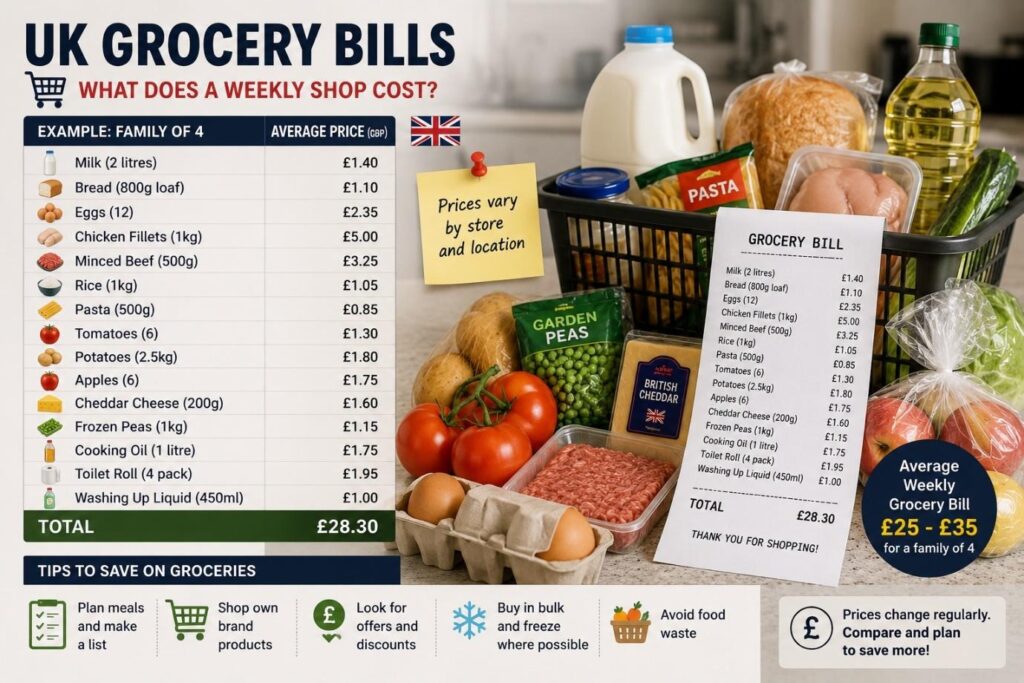
Rising grocery prices
Rising grocery prices in the UK are making it difficult for families to stay in budget day by day. Due to inflation, prices of bread, buttermilk, eggs, vegetables, and meat have risen.
To stay in budget, there is a practical way to plan your budget according to the prices.
Energy Bills
Energy bills are the main reason for the biggest monthly expenses for many UK families. Prices of electricity and gas are increasing because of the inflation rate, energy prices, and energy market rate.
A family’s energy bill depends on many things—the size of the home, the number of people living there, how well it uses energy, and the weather over the year. Typically bills are higher in the colder months, when heating is used more often.
If you want to control your cost control, then you should follow these rules.
Housing Cost
Housing is usually the biggest monthly cost for the majority of UK households and is the base of any budget for a household. No matter if you lease your house or have a mortgage, housing expenses could eat up a large part of your income. In addition to mortgage and rent payments, families should plan for council taxes and maintenance, insurance for homes, and other service fees if applicable.
Costs for housing vary based on many factors, such as the area you live in and how big your home is and whether you reside in a town or a rural region. People who live in urban areas such as London generally face much higher costs for housing than those living in other areas within the UK. It is crucial to reduce stress and to maintain the balance of your household budget.
Childcare Expenses
For families with youngsters, childcare is often one of the largest costs for the month following housing. If you depend on the services of a childminder, nursery, after-school program, or holiday childcare, these expenses could have a major impact on the budget of your family. Incorporating childcare costs into your budget for each month can help you stay away from unexpected costs and help you manage your budget more efficiently.
The amount families spend on childcare depends upon a variety of variables, including the child’s age and the nature of the childcare and the amount of time required, as well as the location you reside in within the UK. Families living in large cities usually have higher fees for childcare as compared to those who live in smaller towns or rural areas.
Practical Ways to Reduce UK Household Expenses
In this you can learn practically how you can save on your cost.
Meal planning
Planning meals is the best way to reduce your grocery expenses. Firstly, check your freezers, fridge, and cupboards before purchasing any item to reduce your expense. If you have fresh vegetables, pasta, or meat, then you should buy only fresh ingredients.
Use of supermarket loyalty cards
There are many supermarkets in the UK offering loyalty cards, offering discounts and rewards.
You can save your expenses by following this table.
| Item | Regular Price | Clubcard Price | Weekly Saving |
|---|---|---|---|
| Chicken Breasts (2 packs) | £14.00 | £12.00 | £2.00 |
| Breakfast Cereal (2 boxes) | £7.00 | £5.50 | £1.50 |
| Milk (4 pints × 2) | £3.80 | £3.40 | £0.40 |
| Bread (2 loaves) | £3.00 | £2.50 | £0.50 |
| Cheese | £5.50 | £4.50 | £1.00 |
| Pasta & Rice | £6.00 | £5.20 | £0.80 |
| Fruit & Vegetables | £25.00 | £23.50 | £1.50 |
| Household Essentials | £18.00 | £16.50 | £1.50 |
| Total Weekly Shop | £82.30 | £73.10 | £9.20 |
Cancel unused subscription
Many UK families are following unused subscriptions that are not in their use, like gym membership, music apps, cloud storage, gaming subscriptions, and magazine fees.
You can follow this practical example for saving.
| Subscription | Monthly Cost | Used Regularly? | Decision | Monthly Saving |
|---|---|---|---|---|
| Netflix Standard | £12.99 | Yes | Keep | £0.00 |
| Disney+ | £8.99 | No | Cancel | £8.99 |
| Spotify Premium Family | £19.99 | Yes | Keep | £0.00 |
| Gym Membership | £29.99 | No | Cancel | £29.99 |
| Amazon Prime | £8.99 | Yes | Keep | £0.00 |
| Cloud Storage | £2.99 | No | Cancel | £2.99 |
| Total Monthly Saving | £41.97 |
Shop during seasonal sale
Shopping in the season of sales will save you heavy expenses on clothing, school supplies, and home appliances. If you follow the chart mentioned below, you can save your money and make it in your budget.
| Item | Regular Price | Sale Price | Saving |
|---|---|---|---|
| Two Children’s Winter Coats | £100 | £70 | £30 |
| Two Pairs of School Shoes | £80 | £60 | £20 |
| Air Fryer | £90 | £65 | £25 |
| Bedding Set | £40 | £28 | £12 |
| Total | £310 | £223 | £87 |
The family saves £87 simply by planning their purchases around a seasonal sale.
Budget with free apps
Using free budget apps will help you in spending, set savings goals, and identify areas where you can cut costs. If you review your finances regularly, you can make the right decision about your expenses and your budget.
Best budgeting tools for UK families
Google sheet
If you are not using any tool, then you must try Google Sheets to stay in budget and plan your expenses according to your budget. This is a free tool; you can use it to manage your household budget.
Money helper budget planner
This free tool helps you in monthly income, recording household expenses, and understanding where your money is going. This tool also helps you to save extra money that you are spending on different items of no use.
Emma
Emma is also one of the best tools for saving your money and staying in your budget. If you spend only ten minutes weekly on Emma, you can save your hundred pounds in the annual budget.
Common Household Budget Mistakes to Avoid
Not tracking your spending
Normally UK families are not looking at their spending; you have to check your spending through free tools such as Google Sheets, Emma, and Snoop to avoid extra spending.
No emergency fund
There are many families in the UK not having funds for their emergency; you can avoid this by having some amount for your emergency use. In emergency conditions like boiler breakdown, car repair, or any other home repair, you can break your budget.
You must plan your savings in an emergency situation.
Overspending on credit
Many UK families spend their money by paying with credit. If you plan your purchasing, you can avoid many extra expenses and save hundreds of pounds.
Don’t purchase everything on credit unless you are confident that you can return it on time.
Forgetting annual bills
There are many families who focus on their expenses but not on their bills. Common annual expenses in the UK include car insurance, home insurance, TV license, vehicle servicing and MOT, school uniforms, and Christmas spending.
These all are important parts of your household budget.
Frequently Asked Questions
What is the average household budget for a family in the UK?
There are different average household budgets based on household size, location, housing costs, and lifestyle. For a family of four, a typical monthly budget often includes housing, council tax, utilities, groceries, transport, childcare, insurance, and other everyday living expenses.
How much should a UK family spend on groceries?
There is not any fixed amount for any UK family; it depends on circumstances and the monthly income of the family members. If you plan your meal, you can save your money.
How can I reduce my household expenses?
You can reduce your household expenses by planning your monthly budget, like your expenses on meals, groceries, bills, and repairs of your home and on other items.
Conclusion
Making smart financial decisions does not mean giving up the things you enjoy. Instead, a well-planned budget helps you enjoy life while staying in control of your finances. The key to successful budgeting is consistency. By regularly reviewing your income, expenses, and savings, you can build better financial habits and work towards your family’s long-term goals.
If you found this guide helpful, save it for future reference and share it with your family and friends who may also benefit from practical tips for managing household expenses.