


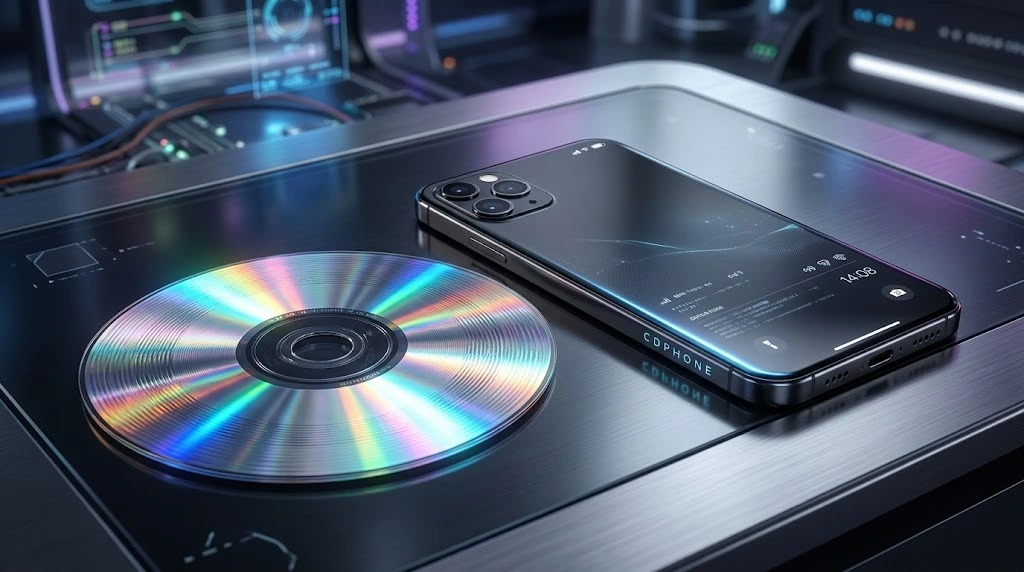
CDiPhone is not an official Apple product currently recognized by Apple. The term is generally used online to describe an Apple-inspired concept that connects the idea of CD-based music with the features and convenience of modern smartphone technology.
Imagine having a shelf full of old CDs at home and an iPhone in your pocket. One represents the way many people used to buy, own, and listen to music. The other gives you access to digital entertainment, apps, communication, and the internet from a single device.
The idea behind the CDiPhone comes from bringing these two worlds together.
It is an interesting concept, especially for people who remember buying music on CDs before digital downloads and streaming became the norm. However, it is important to separate the concept from reality. Apple has not officially released a product called CDiPhone.
So, what exactly does CDiPhone mean? Why do people connect the term with Apple, and can you actually listen to your old CD collection on an iPhone today?
Also, read more interesting articles
What Is CDiPhone?
Understanding the CDiPhone Meaning
The name itself gives us the basic idea.
A compact disc, or CD, is a physical digital storage format commonly used for music, movies, software, and other types of data.
Apple’s iPhone series includes their mobile phone products.
Combine these phrases, and then “CD iPhone” is an expression implying some linkage of analog discs with mobile phones. It has its own definition, though there are variations of it as well.
It can also refer to an idea about a mobile device capable of functioning as if it were connected by way of CD discs and providing access to both analog and digital technologies. This explains how we can call a CD phone an ‘Apple-inspired device.
Not an approved item having specs and release dates nor any listing on Apple’s website. It’s still very much intuitive. There is someone who has some CDs in their house, and they use their phones daily.
Why People Connect CDiPhone With Apple
The connection with Apple is not completely random.
The company is well known for its work with audio products on-line. Prior to smartphones being popular as an instrument for daily use, iPods were helpful while carrying big albums on smaller gadgets. In 2001, when Apple released the first iPod, it marketed it as being capable of holding up to 1,000 CD-quality songs.
It is an enormous change in how humans perceive songs now.
Users can instead have an album on their phones rather than bags filled with records they’re carrying around them all day long. Later on, the iphone made that concept of an integrated product possible through its inclusion within a single gadget for making calls as well internet connectivity alongwith applications; camera functions, etc.
When someone sees “CD iPhone,” they are immediately aware of its association with the Apple company. The iPod helped bridge the gap between physical music collections and portable digital audio, whereas the iPhone went up one notch on that front.
Is the CDiPhone a Real Apple Device?
No confirmed official Apple product named the CDiPhone is currently available.
It should be emphasized as well since product listings online may give an impression of it being actual Apple products having their own components, specs, etc.
No, there isn’t a product known as “cdiphone” that you could purchase on behalf of your customer base through the Apple company. Also, there is nothing of an Apple-specific product like a CD drive & special OS called CD iPhone.
Thus, when one sees that expression online, then it’s best understood by them as a non-formal notion of CDs along with iPhone-like products.
It isn’t worthless at all. That is, don’t sell a fictional item like apples; you are supposed to be selling real ones.
Conceptual image of an old CD next to a new mobile phone.
An alternative description for “CD iPhone” is a product that combines analog sound with mobile phone functionality.
The Idea Behind the CDiPhone Concept
Combining Physical Music With Modern Technology
It’s really easy to understand.
People have purchased CDs for many years now. Nowadays majority of individuals employ mobile phones for listening to online audio files today. The CD iPhone is an idea of bridging those worlds together.
A reader of discs, tapes, etc. This is probably just an analogy for how you take songs off your CDs and then put them on your phone’s MP3 player app.
Secondly, it is a bit of an innovation. Secondly, it’s also feasible.
That difference matters. An idea is fun but not an actual thing either. Actually most innovations start off as an easy-to-answer query like “How can I use what I have?”
From CDs and iPods to Smartphones
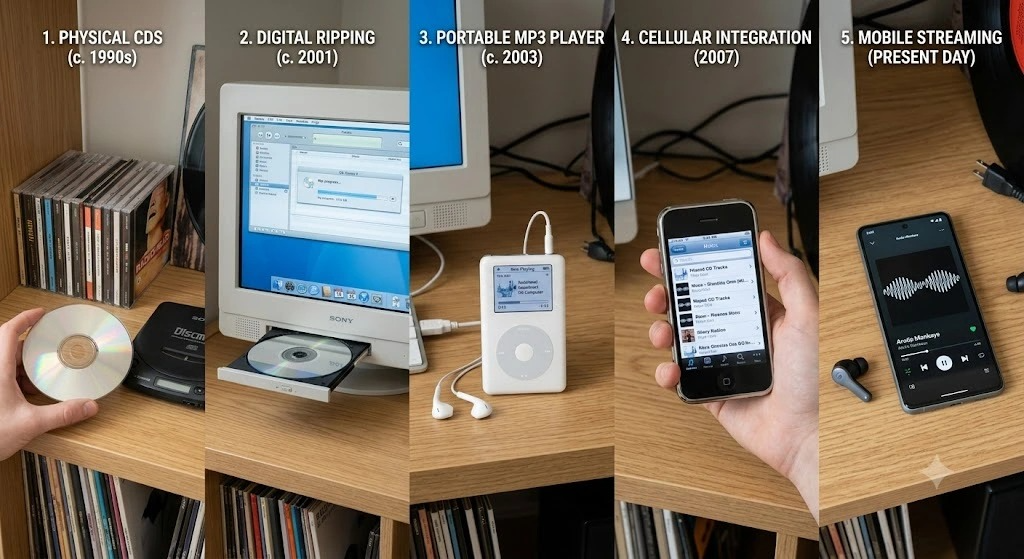
The evolution of music technology is easy to follow:
CDs → MP3 players → iPod → smartphones → streaming
Each step made music easier to carry or access.
The CD allowed individuals ownership of their disc records physically. MP3 discs saved room for storing songs. Large volumes of digital music were easy to carry with an iPod. Then smartphones connected audio to communications applications, cameras, the internet, etc.
The streaming service was a significant alteration as well. Rather than having all their songs on discs and downloads, they can get unlimited access to them via websites.
The CD iPhone is a bit mid-story here. This is a reflection of how human relationships to musicians are more important than their instruments, even if they’ve changed greatly over time.
Why Hybrid Technology Concepts Attract People
A lot of kids have collected CDs, whereas a few are more recent who used to listen on MP3 players and then moved onto online audiobook platforms as well.
They’re totally distinct events.
The experience includes racks and boxes of albums, along with the sense of owning the music itself. Users might also look up an album title and click on it almost immediately.
The concept blends old-school charm with a sleek, modern design.
If you have an old CD collection on your desk, then it is interesting how well one could use these recordings through their smartphones today. Not all that’s needed to revive old machines, though. It’s all about preserving what matters most for users, but simplifying their access now and then.
The Connection Between CDs, iPods, and iPhones
How CDs Changed Music
The CDs altered songs as they allowed for the storing of data electronically rather than on paper, which is now possible through CDs.
Many fans had a purchase of music as well. It was more than looking up songs on-line. Your choice was a record you purchased and then took out of its packaging, putting that item in my cart now.
Indeed, CDs weren’t all that great. There is much room for many books; it’s hard to carry all your discography at once.
This led to a need for better mobility when storing songs.
The Role of the Apple iPod
One product that was pivotal during this change is an iPod.
The Apple’s first product that was an iPod enabled people with many high-quality CDs on their tiny devices. It was launched by the company in 2001 to store up to 1,000 songs on your phone.
It is more about what they do than how you use them. Behavioral alteration is what happened there.
No one had anymore choice of just some records when going out from the house. The albums might be taken by you and with them.
Thusly speaking, the iPod paved the way for the transition of analog audio tapes towards electronic collection platforms as we know them now.
How the iPhone Changed Mobile Entertainment
The iPhone expanded the role of a mobile device even further.
A person could use one device for calls, messages, web browsing, photography, games, videos, music, and many other tasks.
That is one reason the CDiPhone concept feels connected to the iPhone. The iPhone represents the idea of bringing different functions into one device.
Modern iPhones can store music and provide access to music services. Users can also download supported music for offline listening, depending on the service and setup they use.
The Move From Physical Music to Streaming
Digitalization of entertainment is on its way for musicians and artists alike.
Many musicians don’t buy albums anymore; they listen on subscriptions and/or download their songs digitally instead. The streaming service allowed people easy access to many albums that were not stored anywhere else, like on their mobiles.
However, there is still a part of music that is tactilely appealing.
Still, some folks collect CDs. Other artists have tracks they can’t get easily from online stores. Others prefer to have a tangible object that is theirs.
Here’s when you can use a smartphone. This is an opportunity for property as well as ease of use.
Can You Play a CD Directly on an iPhone?
Why iPhones Do Not Have Built-In CD Drives
An ordinary mobile phone can’t read and write to discs, as there is no CD player on them.
It’s mostly for convenience’s sake.
The physical size of an iPod compared with those that are currently on sale for smartphones is greatly different, however. The usual CD disk reader needs room for storage as well as an ability that spins up discs while reading them out.
Current mobile devices are now filled with battery packs, camera modules, processor units; microphone systems; WiFi accessories, etc. A machine-readable disc reader will increase the complexity of your product, as well as its dimensions/weight.
Also there’s an easy one about wants. Many individuals today utilize online audio applications and download options, as well as file storage solutions from computers/devices. A CD disk drive will be of great value to most people who don’t really require any other peripherals nowadays.
How to Import Music From a CD
If you have an old CD collection, you can still bring that music into your digital library.
The general process looks like this:
- Insert the CD into a computer with a compatible CD drive.
- Import the songs into a music application.
- Save the music as digital audio files.
- Check the album and track information.
- Transfer or sync the music to your iPhone.
Apple provides instructions for importing music from audio CDs into the Music app on Mac. Windows users can also import CD music using supported software and then sync music to an Apple device.
If your computer does not have a built-in disc drive, an external CD/DVD drive can be used where supported.
How to Listen to CD Music on an iPhone
After importing songs, there are many options for listening from an iPhone app.
Digital files can be copied and pasted onto your computer/mobile phone/tablet; you can also download an app that has access to popular songs on-line.
It varies according to what you have installed with respect to a PC/PCD/device/etc. The app allows for file transfer as well as synchronization of songs across PCs along with mobile phones (iPhones).
The main point is simple: you do not need a CD drive inside your phone to enjoy the music stored on your CDs.
How Would a CDiPhone Concept Work?
This section is hypothetical. There is no confirmed CDiPhone hardware to describe as an actual product.
Physical CD Integration
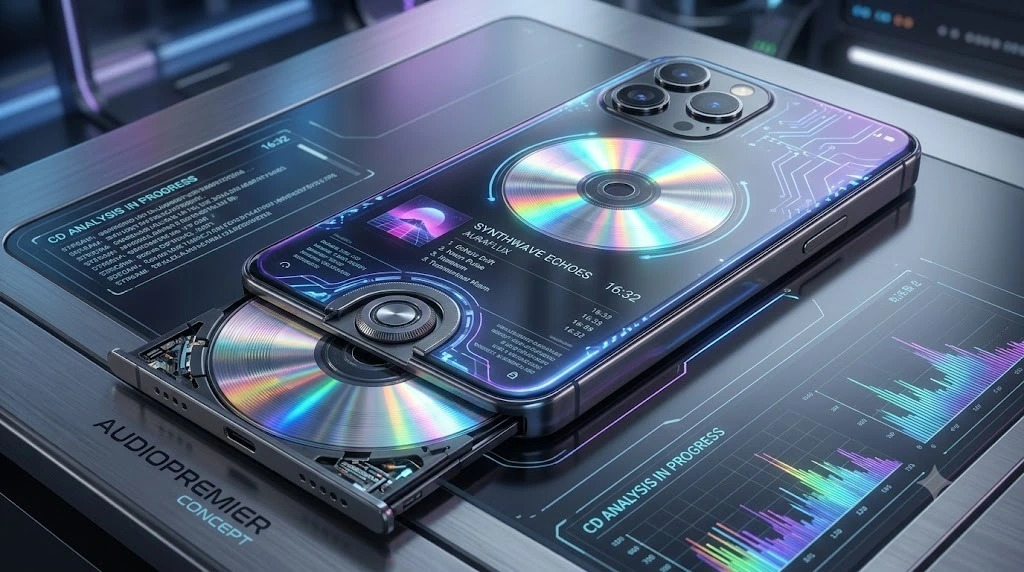
In theory, a CD iPhone could include a way to read physical discs.
The biggest challenge would be designing a mechanism that could handle a full-size CD without making the device too large or uncomfortable to carry.
Another possibility would be an external accessory that connects to the phone. That approach could provide the CD-reading function without putting a full optical drive inside the smartphone itself.
Digital Music Storage
If developed, a CDiPhone concept could theoretically turn music from a physical disc into digital content.
Once imported, the music could be stored in a library and accessed through a smartphone-style interface.
This would make the device more than just a CD player. It would connect physical media with the convenience of digital storage.
Personal Music Library Management
A modern interface could make it easier to manage a collection.
Users might be able to sort albums, search for artists, create playlists, edit track information, and add artwork.
These are not unusual ideas. Modern music applications already provide many of these functions. The interesting part would be connecting them to music that originally came from physical CDs.
Offline Music Access
Offline listening could be another reason people might like the concept.
A personal music collection does not need to be streamed every time you want to listen to it. Once music is stored on a compatible device, it can be available without a constant internet connection.
That can be useful when traveling, dealing with poor connectivity, or simply trying to reduce mobile data use.
Smartphone Features and Connectivity
The “iPhone” part of the concept would suggest more than music.
In theory, a hybrid device could combine music with the features people expect from a modern smartphone, such as apps, communication, internet access, and wireless connectivity.
That is what makes the idea interesting—but also difficult to build. Every extra function requires space, power, and careful hardware design.
Why Is the CDiPhone Concept Interesting?
It Connects Retro and Modern Technology
The concept brings together two technologies that normally do not appear in the same conversation.
CDs feel like part of an earlier period of music. Smartphones are firmly part of the present.
Putting them together creates a kind of retro-futuristic idea. It is familiar enough to understand but unusual enough to make people curious.
It Appeals to Music Collectors
People who collect music may understand the appeal immediately.
A music collection is not always just a group of files. For many people, albums are connected to memories, particular periods of life, or favorite artists.
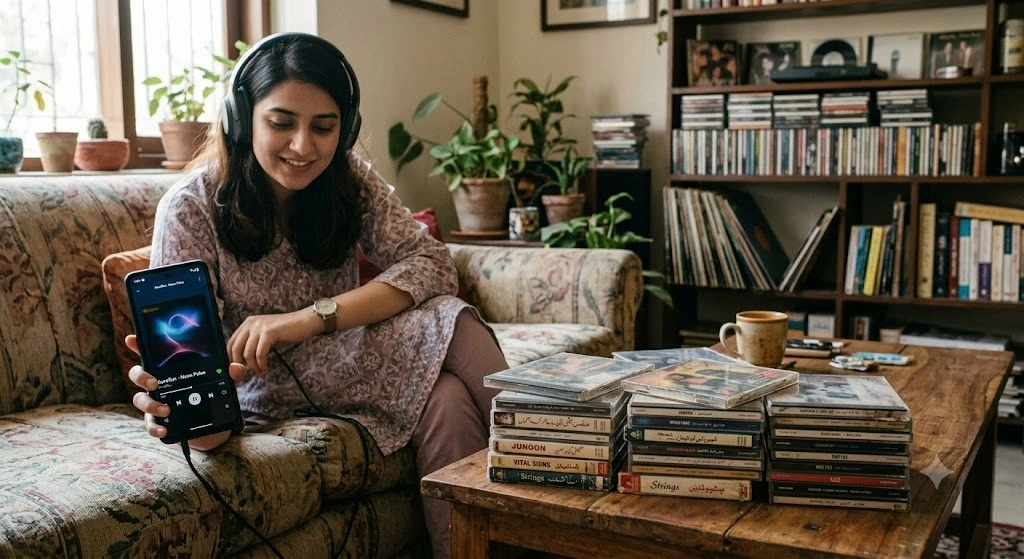
Someone may have a shelf full of CDs purchased over many years. The idea of carrying that collection in a modern smartphone feels surprisingly appealing, even if the physical discs stay at home.
It Offers an Offline Music Idea
Streaming is convenient, but it is not the only way to listen.
Offline music can be useful during travel, in places with weak internet coverage, or when someone simply wants access to their own collection without relying on a streaming service.
Modern Apple devices and services already support offline music in different ways, including downloaded content and synced music libraries.
It Represents All-in-One Technology
The broader idea behind CDiPhone is also connected to the way technology keeps combining different functions.
People once needed separate devices for music, calls, photography, navigation, and internet access. Smartphones reduced the need for many of those separate gadgets.
A CDiPhone concept would take that all-in-one idea in another direction by trying to connect physical media with digital technology.
CDiPhone Concept vs a Regular iPhone
| Feature | CDiPhone Concept | Regular iPhone |
| Official Apple Product | Not confirmed | Yes |
| CD Drive | Conceptual | Not built-in |
| Digital Music | Possible concept | Supported |
| Smartphone Features | Imagined | Available |
| Physical Music | Central idea | Requires external methods |
| Availability | No confirmed commercial device | Widely available |
The main difference is the product status.
A regular iPhone is an actual Apple device with official models, software, support, and documented features. CDiPhone is a concept that connects physical CD music with modern smartphone technology.
That distinction is important when reading online information about the term.
Potential Benefits of a CDiPhone Concept
Combining Physical and Digital Music
The biggest attraction would be the ability to connect music ownership with digital convenience.
A person could keep their physical collection while also having a more practical way to access it.
Better Offline Access
A hybrid concept could give users another way to enjoy music without relying completely on a live internet connection.
This would be particularly useful for people who travel often or live in areas where connectivity is not always reliable.
Personal Media Ownership
Streaming has made music easier to access, but some people still prefer owning their favorite albums.
A system connected to personal music collections could appeal to listeners who want more control over the content they keep.
A Unique Entertainment Experience
A device that connects physical media, digital music, and smartphone features would offer a different kind of experience from a standard streaming-focused device.
It could combine the feeling of collecting music with the convenience of modern technology.
Less Dependence on Internet Connectivity
A personal digital music library can reduce the need to stream every song online.
Of course, a real device would still need to solve storage and hardware challenges, but the basic idea of having music available offline remains useful.

Challenges of Creating a CDiPhone
The idea sounds interesting, but building it would not be simple.
The Size of a CD Drive
A standard CD is physically much larger than a smartphone.
A device would need enough space to accept and read the disc, making it thicker or larger than the phones people usually carry.
This is probably the most obvious challenge.
Battery Consumption
A physical optical drive would contain moving parts and could require additional power.
Smartphone manufacturers already have to balance performance, screen size, cameras, connectivity, and battery life. Adding another power-hungry component would make that balance more difficult.
Heat and Internal Space
Modern smartphones pack a lot of technology into a relatively small body.
There is limited internal space for every component. Adding a disc drive would mean redesigning the internal layout and finding room for additional hardware.
Heat management could also become more complicated.
The Rise of Digital Music
The market has moved heavily towards digital music and streaming.
Many users simply do not need a CD drive. They can listen to music through apps, download albums, or access online libraries.
That makes it difficult to justify adding a large physical component to a modern smartphone.
Durability and Mechanical Components
Modern smartphones generally rely on solid-state storage and have fewer mechanical components than older media devices.
A CD drive would introduce moving parts. Moving parts can wear out or become damaged over time.
For a product designed to be carried every day, that could create another practical concern.
Image idea: A visual comparison showing the size of a standard CD beside the internal space of a modern smartphone.
Suggested alt text: Comparison between a standard CD and the limited internal space of a smartphone
How to Get CD Music on Your iPhone Today
You do not need to wait for a hypothetical CD iPhone to enjoy your old music collection.
Step 1: Import Your CD Music
First, use a computer with a compatible CD drive. Insert the audio CD and open the appropriate music application.
On Mac, Apple’s Music app can import songs from an audio CD into your music library. Windows users can also import CD tracks using supported software.
Step 2: Convert Music Into Digital Files
When music is imported from a CD, it is stored in a digital audio format.
The available format and settings can vary depending on the software you use. If audio quality is important to you, check the import settings before processing your entire collection.
Step 3: Organize Your Music Collection
Do not skip this step if you have many CDs.
Check the artist names, album titles, song names, and artwork. A few minutes of organization can save you a lot of frustration later.
If you have dozens of albums, it may be helpful to transfer them in batches rather than trying to process your entire collection at once.
Step 4: Transfer Music to Your iPhone
After importing the music, you can transfer or sync it to your iPhone using the supported method for your computer and software setup.
Apple provides options for syncing music between computers and Apple devices, including current tools for Windows users.
Step 5: Listen Offline
Once the music is on your iPhone, you can listen without carrying the original CD.
For example, if you have a collection of old CDs sitting in a cupboard at home, you can gradually convert the music into digital files and enjoy it on your iPhone while traveling, commuting, or relaxing.
The physical collection can stay safely at home. Your music can travel with you.
CDiPhone and the Future of Hybrid Technology
Will Physical Media Make a Comeback?
It is difficult to say exactly what will happen with physical media.
Streaming has become extremely popular, but physical formats have not disappeared completely. Some people continue to buy CDs, vinyl records, books, and other physical products because they enjoy owning something tangible.
The future may not be a complete return to the past. Instead, physical and digital media may continue to exist alongside each other.
Why Offline Content Still Matters
Internet access is not perfect everywhere.
People travel, lose connectivity, face data limits, or simply prefer to store important content locally.
That is why offline access remains useful even in a world dominated by streaming.
Music stored on a device can be available when an internet connection is not.
Could Future Devices Combine More Technologies?
Technology has a long history of combining separate functions into fewer devices.
A future product may not use a traditional CD drive at all. Instead, it could use external accessories, smarter storage, or new ways to connect physical collections with digital devices.
The specific form may change, but the desire for convenience is unlikely to disappear.
The Role of AI and Smart Personalization
AI could make personal media collections easier to manage.
Imagine a system that automatically organizes albums, identifies duplicate tracks, recommends songs from your own collection, or creates playlists based on your listening habits.
These ideas do not require a physical CD drive, but they could make the experience of owning and managing personal music much more intelligent.
What the Future of Mobile Entertainment May Look Like
Mobile entertainment will probably continue moving towards more personalized and connected experiences.
People may use a mixture of streaming services, downloaded content, personal files, cloud libraries, and physical collections.
The future may not be about choosing between physical and digital media. It may be about making the two work together more smoothly.
That is ultimately what makes the CDiPhone concept interesting. It represents a simple question about how old forms of media could fit into the technology people use today.
Frequently Asked Questions About CDiPhone
What is CDiPhone?
CDiPhone is an unofficial Apple-inspired concept associated with the idea of combining CD-based music with modern smartphone technology.
Is CDiPhone an official Apple product?
No. There is no confirmed official Apple product called CDiPhone. It should be treated as an unofficial concept or online term.
Can an iPhone play a CD directly?
No. Modern iPhones do not have built-in CD drives. However, music from a CD can be imported into a digital music library and transferred to an iPhone.
Can I transfer CD music to an iPhone?
Yes. You can import music from a CD using a compatible computer and then sync or transfer the digital music to your iPhone using supported methods.
Why do people search for CDiPhone?
People may search for CDiPhone because the name combines CDs with Apple’s iPhone. The term may also attract people interested in the relationship between physical music collections and modern digital technology.
Is CDiPhone a real device or a concept?
CDiPhone is best understood as an unofficial concept rather than a confirmed commercial Apple device.
What is the difference between CDiPhone and a regular iPhone?
A regular iPhone is an official Apple smartphone. CDiPhone is an unofficial concept based on the idea of connecting physical CD music with smartphone technology.
Can I listen to my old CD collection on an iPhone?
Yes. You can import the music from your CDs into a digital library and then transfer the music to your iPhone for listening. You do not need to carry the physical discs with you.
Final Thoughts on the CDiPhone Concept
CDiPhone is an interesting idea because it connects two very different periods in music technology.
CDs represent physical collections, album artwork, and the experience of owning music. The iPod helped move those collections into portable digital libraries. The iPhone then brought music together with communication, apps, internet access, and many other smartphone features.
That history explains why the CDiPhone concept feels familiar, even though there is no confirmed Apple product by that name.
The important thing is not to confuse the concept with an official device. CDiPhone is not currently recognized as a confirmed Apple product. Instead, it is best understood as an Apple-inspired idea exploring how physical CD music could connect with modern smartphone technology.
For people who still have old CDs at home, there is already a practical solution. You can import the music, organize it as digital files, and transfer it to your iPhone for convenient listening.
You may not be able to put a CD directly into a modern iPhone, but you can still bring the music from that collection into your pocket.
And perhaps that is the most realistic version of the CDiPhone idea: keep the music you already own while using the technology you already carry.
